
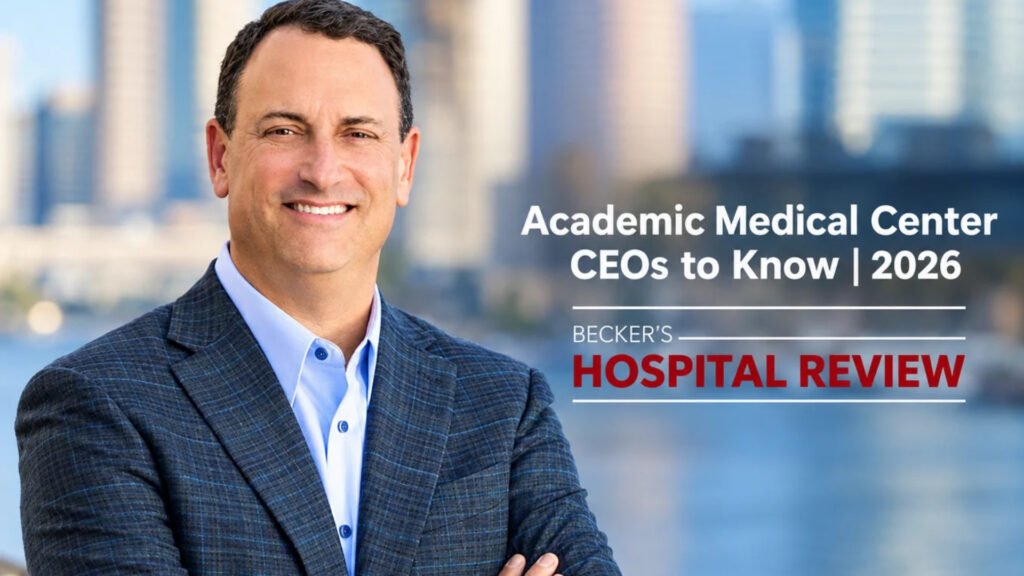
John Couris and the Evolution of Modern Hospital Leadership
Leading a major hospital system today requires much more than managing day-to-day operations. Healthcare organizations are dealing with rising costs, workforce challenges, changing patient expectations, new technologies and an increasingly complex healthcare environment.
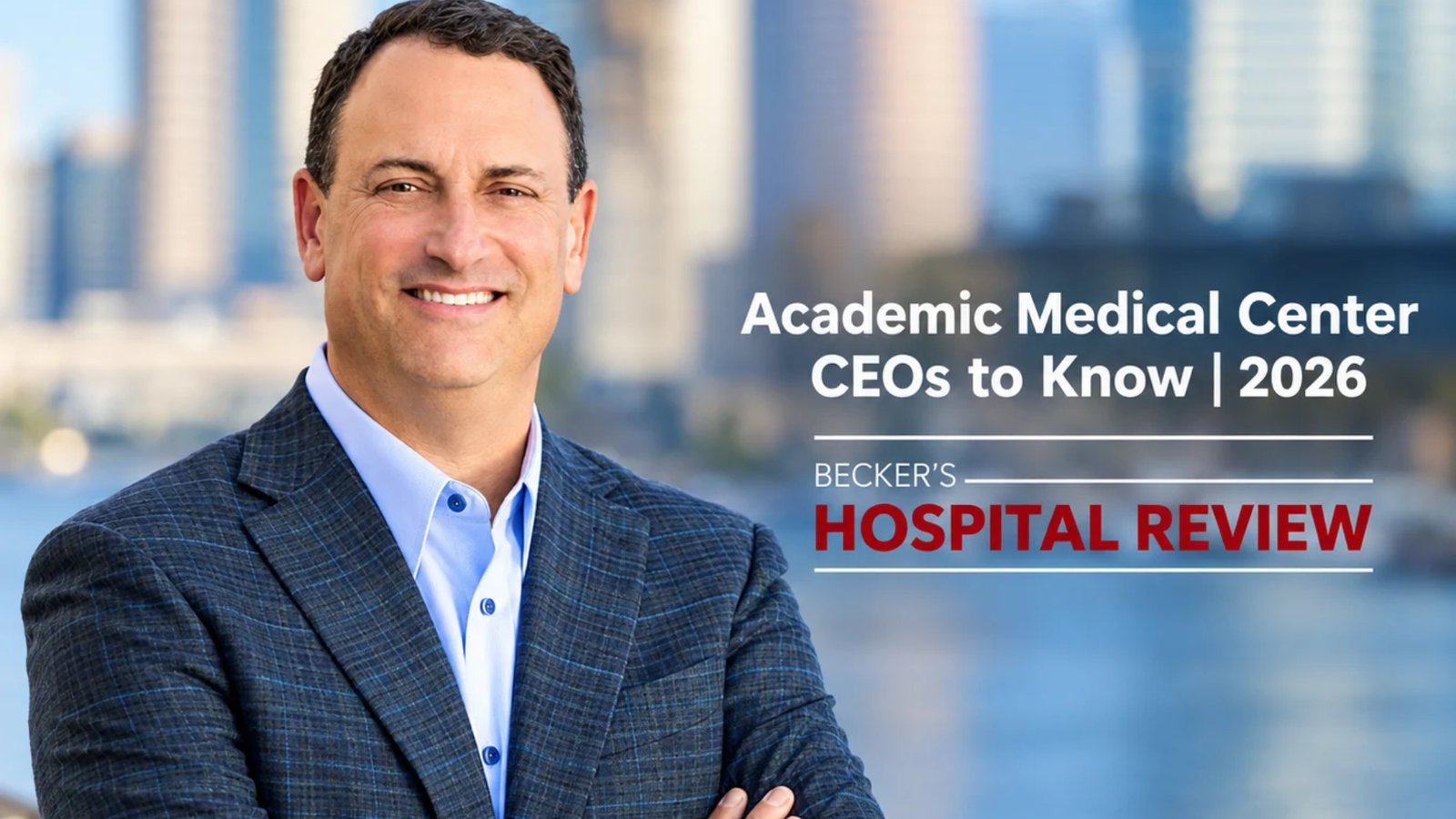
For John Couris, President and CEO of Florida Health Sciences Center and Tampa General Hospital, leadership has meant bringing many of these priorities together.
Couris has led Tampa General since 2017. Under his leadership, Tampa General has developed into a major integrated academic health system in partnership with the University of South Florida Health Morsani College of Medicine. The organization says its system includes more than 15,000 team members and providers and provides care ranging from wellness services to highly complex specialty care. Tampa General Hospital
His leadership has also been associated with expansion, innovation, academic medicine and community-focused healthcare. In 2026, Tampa General was again ranked the No. 1 hospital in the Tampa Bay region, marking the 11th consecutive year it received that distinction from U.S. News & World Report. Tampa General Hospital
But the more interesting story is what sits behind those achievements.
The John Couris hospital leadership approach offers several lessons for healthcare executives who are trying to build organizations that are innovative, financially sustainable and focused on patients.
1. Build a Strong Vision Before Pursuing Growth
One of the most important lessons from John Couris is that growth needs a clear purpose.
Tampa General has expanded its network and capabilities while maintaining its identity as an academic health system. The organization has developed hospitals, outpatient services, urgent care, virtual health services and hospital-at-home capabilities. Tampa General Hospital
Growth in healthcare can easily become a numbers game: more facilities, more services and more patients.
But effective hospital leadership asks a different question:
What does this growth allow the organization to do better?
For Tampa General, growth has been connected with improving access to academic medicine, expanding specialty care and strengthening the system’s ability to serve communities.
Tampa General’s Strategic Growth Model
| Strategic Area | Leadership Objective |
|---|---|
| Hospital expansion | Increase capacity for complex care |
| Outpatient services | Make healthcare more accessible |
| Virtual care | Extend services beyond traditional facilities |
| Academic partnerships | Connect care with education and research |
| Community services | Reach patients closer to where they live |
This approach demonstrates why strategy should come before expansion.
A hospital can become larger without becoming better. The goal should be to make growth meaningful for patients, physicians and the communities being served.
2. Make Innovation Part of the Organization’s Culture
Innovation is another defining feature of John Couris healthcare leadership.
Tampa General created TGH InnoVentures, a venture capital initiative designed to support healthcare startups and encourage innovation within the academic medical center and the wider region. The initiative was launched with the goal of helping Tampa General become one of the safest and most innovative academic health systems in the country. Tampa General Hospital
This is important because innovation cannot be treated as a once-a-year project.
It needs to become part of the culture.
In 2025, Tampa General received the inaugural Healthcare Innovation Award from The Joint Commission for integrating innovative strategies and technologies to improve safety and quality. Couris said the organization had worked to create an environment where people could innovate and contribute new ideas. Tampa General Hospital
What an Innovation Culture Looks Like
| Traditional Approach | Innovation-Focused Approach |
|---|---|
| Innovation comes from leadership | Ideas can come from across the organization |
| Technology is purchased | Problems are identified first |
| Projects remain isolated | Successful solutions are scaled |
| Failure is avoided | Controlled experimentation is encouraged |
| Results are measured later | Outcomes are built into the strategy |
This is an important distinction.
Healthcare innovation is not simply about having the newest technology. It is about creating an environment where people are willing to identify problems and find better ways to solve them.
3. Put People at the Center of Performance
Technology and strategy receive a lot of attention in healthcare leadership, but hospitals ultimately depend on people.
Physicians, nurses, technicians, administrators, researchers and support teams determine what patients experience every day.
Couris has repeatedly emphasized the importance of Tampa General’s workforce. In 2026, Forbes ranked Tampa General as Florida’s No. 1 large employer in the healthcare and social services category. Couris linked the organization’s success to investments in team members’ professional development and individual needs. Tampa General Hospital
This provides a valuable leadership lesson:
A patient-first organization has to be a people-first organization.
If employees are exhausted, unsupported or disconnected from leadership, even the best strategic plan can struggle.
People-Centered Hospital Leadership
| Leadership Priority | Potential Organizational Impact |
|---|---|
| Professional development | Stronger workforce capabilities |
| Employee engagement | Better team connection |
| Supportive culture | Improved retention |
| Leadership communication | Greater organizational alignment |
| Recognition | Stronger sense of purpose |
For healthcare Cellos, workforce strategy is therefore not a separate HR issue.
It is a core part of healthcare strategy.
4. Connect Academic Medicine With Real-World Patient Care
Tampa General is the primary teaching hospital for the USF Health Morsani College of Medicine. Its academic structure connects patient care with education and research. Tampa General Hospital
That combination can create an important advantage.
Academic health systems have the opportunity to bring together:
- Clinical care
- Medical education
- Research
- Innovation
- Specialized treatment
- New technologies
Under Couris, Tampa General has continued to emphasize the connection between these areas.
This is especially important as medicine becomes more specialized and technology-driven. The next generation of physicians needs exposure to new clinical tools, research and evolving models of care.
At the same time, research needs a pathway into actual patient care.
5. Use Technology to Improve Healthcare — Not Complicate It
Digital transformation is now an essential part of hospital strategy.
Tampa General has invested in technology, analytics, artificial intelligence and digital tools designed to improve care coordination and operational performance. Its AI-powered Care Coordination Center has been developed through partnerships including GE Healthcare and Palantir. Tampa General Hospital
The organization has also used predictive analytics and AI to support clinical workflows, patient safety and care coordination. Tampa General Hospital
But successful technology adoption requires more than buying software.
Technology needs to fit the workflow of the people using it.
Technology and Healthcare Leadership
| Technology | Strategic Purpose |
|---|---|
| Artificial intelligence | Support decision-making and coordination |
| Predictive analytics | Identify risks and opportunities earlier |
| Digital scheduling | Improve convenience and access |
| Virtual health | Extend care beyond hospital walls |
| Automation | Reduce repetitive administrative work |
| Data platforms | Support better organizational decisions |
This is where John Couris healthcare innovation becomes relevant.
The goal is not to make a hospital look more digital.
The goal is to make healthcare more connected, efficient and useful.
6. Think Beyond the Hospital Building
Modern healthcare leadership increasingly requires thinking beyond traditional hospital walls.
Patients do not experience healthcare as a collection of departments. They experience it as a journey.
That journey might include a primary care appointment, diagnostic testing, a specialist consultation, surgery, rehabilitation and follow-up care.
Tampa General has expanded its capabilities across different parts of that journey. The system includes hospitals, outpatient centers, urgent care clinics, virtual health services and TGH at Home. Tampa General Hospital
This broader model can make healthcare more connected.
The organization has also developed the Tampa Medical & Research District, designed as a hub connecting clinical care, academics, research and biotechnology. Tampa General has described the district as an important part of its long-term vision for healthcare and innovation in the region. Tampa General Hospital
This illustrates an important point:
Healthcare leadership is increasingly about building ecosystems, not just hospitals.
A successful healthcare ecosystem brings together providers, universities, researchers, technology companies, startups, patients and communities.
7. Measure Success Through Quality, Not Just Growth
Growth is important, but healthcare organizations cannot measure success by expansion alone.
Quality, safety, patient outcomes and experience have to remain central.
Tampa General’s continued national recognition provides one indication of this focus. In August 2026, the organization reported that it had been ranked No. 1 in the Tampa Bay region for the 11th consecutive year and received regional No. 1 rankings for cardiology, heart and vascular surgery, and rehabilitation. Tampa General Hospital
Tampa General was also named to Becker’s 2026 list of 100 Great Hospitals in America. The recognition highlighted the organization’s patient care, academic medicine, research and use of innovation. Tampa General Hospital
These recognition’s are not the strategy themselves.
They are signals of what happens when strategy, operations, people and clinical quality work together.
Measuring a Modern Health System
| Measure | Why It Matters |
|---|---|
| Patient outcomes | Shows whether care is effective |
| Safety | Reduces preventable harm |
| Patient experience | Reflects quality from the patient’s perspective |
| Workforce engagement | Supports sustainable performance |
| Access | Shows whether people can receive care |
| Financial sustainability | Enables continued investment |
A strong CEO therefore has to look beyond financial performance.
The best healthcare leadership balances people, quality, access, innovation and sustainability.
John Couris: A Leadership Model for the Future of Healthcare
The story of John Couris Tampa General Hospital is ultimately a story about transformation.
Since taking the leadership role at Tampa General, Couris has helped guide the organization through expansion, technological change, academic development and a stronger emphasis on innovation.
His leadership has also received national attention. In December 2025, Modern Healthcare named Couris among its 100 Most Influential People in Healthcare, citing his work around innovation, access, healthcare excellence and the growth of Tampa General’s academic health system. Tampa General Hospital
The recognition is significant, but the larger lesson is more practical.
Healthcare leaders do not have to choose between innovation and stability.
They can pursue both.
They can invest in new technology while protecting patient safety. They can expand services while maintaining quality. They can pursue growth while investing in employees. They can build partnerships while protecting the identity and mission of the organization.
That balance is increasingly important as healthcare becomes more complex.
What Healthcare Leaders Can Learn From John Couris
There are seven major lessons that stand out from the Tampa General story:
1. Have a clear vision before expanding.
Growth works best when it supports a defined mission.
2. Make innovation part of everyday culture.
Innovation should not belong to one department.
3. Invest in people.
A strong workforce is the foundation of a strong healthcare system.
4. Connect academics and clinical care.
Education and research can accelerate better healthcare.
5. Use technology with purpose.
AI and digital tools should solve real problems.
6. Build healthcare ecosystems.
Partnerships can connect hospitals, universities, research and communities.
7. Keep quality at the center.
Growth only matters when it ultimately improves care.
Conclusion: The Future of Hospital Leadership
The healthcare industry is entering an era defined by rapid technological development, changing patient expectations and increasing pressure on healthcare organizations to deliver more value.
In that environment, John Couris offers an interesting example of modern hospital leadership.
His work at Tampa General demonstrates how an academic health system can pursue growth while continuing to focus on innovation, people, access and clinical quality.
The biggest lesson is simple: healthcare leadership is not about choosing one priority.
It is about connecting them.
Technology should support people. Growth should improve access. Research should reach patients. Innovation should improve outcomes. And organizational success should ultimately be measured by the quality of care delivered to the communities a health system serves.
That is what makes the John Couris leadership approach relevant beyond Tampa General Hospital.
The future of healthcare will belong to organizations that can innovate without losing their human focus — and leaders who can turn ambitious strategies into meaningful results for patients.